
Guide 5 of 10
Touch up a trolley mark or repaint the whole wall?
Look at the extent of the wear, the light across the wall and the nearest natural break before you choose the repair.
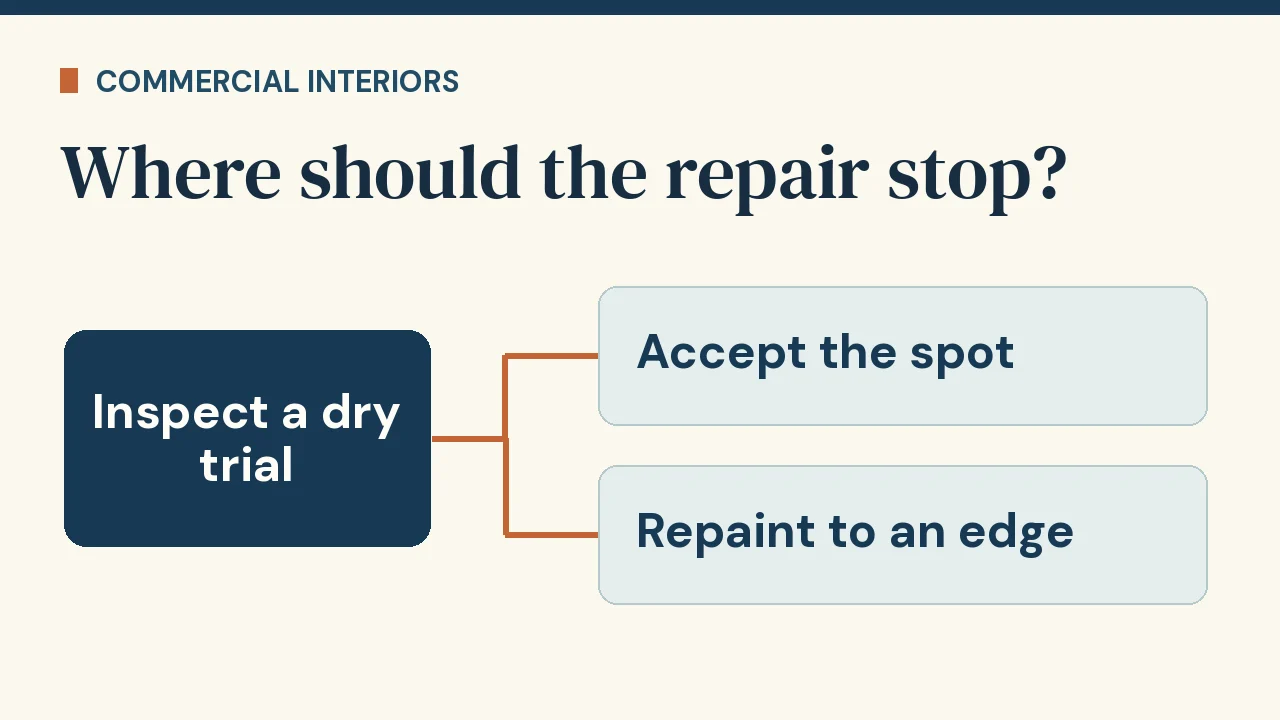
A single trolley strike beside the stockroom door and a dark band at trolley height along an entire corridor are different repair jobs. Begin by marking the extent of the wear and looking along the surface from the direction customers normally approach. That view will tell you much more about the likely size of the repaint than a close-up of the worst dent.
First decide what actually needs fixing
Work along a small section with the manager. Separate transfer marks that might come off under the coating’s care instructions from chips, dents and worn-through finish. A corner that gets hit every delivery day may need a separate conversation about protection or traffic. Repainting will refresh the surface. It won’t move the trolley route.
Find the existing finish record if there is one. The product line, colour and sheen matter, and so does the condition of the surrounding wall. A tin marked only “grey” doesn’t tell the painter whether the original was a flat or a more reflective finish. A same-colour touch-up can still catch the light differently. Use the paint and finish record to keep the information for the next repair.
Pick a stopping point in the real light
Consider a reception wall that runs from a doorway to an outside corner beside a window. A small nick behind the counter and several patches in the daylight near that corner may call for separate decisions. Ask about a small trial where the existing finish is known. Agree where to stand and when the result can be assessed under the actual lighting. The manager and painter can then decide whether it’s acceptable.
For the longer damaged stretch, mark the edge of the wall you would include if a trial stands out. A doorway that interrupts most of a wall may still leave a continuous band above it. Point to where the new finish ends so the written quote reflects the view you’ll see afterwards.
Ask for the two scopes separately
A useful request reads, “Review isolated chips at the counter for trial touch-up. Price the window-side wall from inside corner to outside corner, including agreed patch preparation.” Photograph both from across the room. You can group recurring damage into a commercial maintenance walkthrough and leave isolated cosmetic marks until the right work window.