
Guide 7 of 10
Which paint sheen belongs on a busy hallway, ceiling or trim?
Start with what touches the surface and where the light hits it. Two paints in the same colour can look different beside each other once their finishes change.
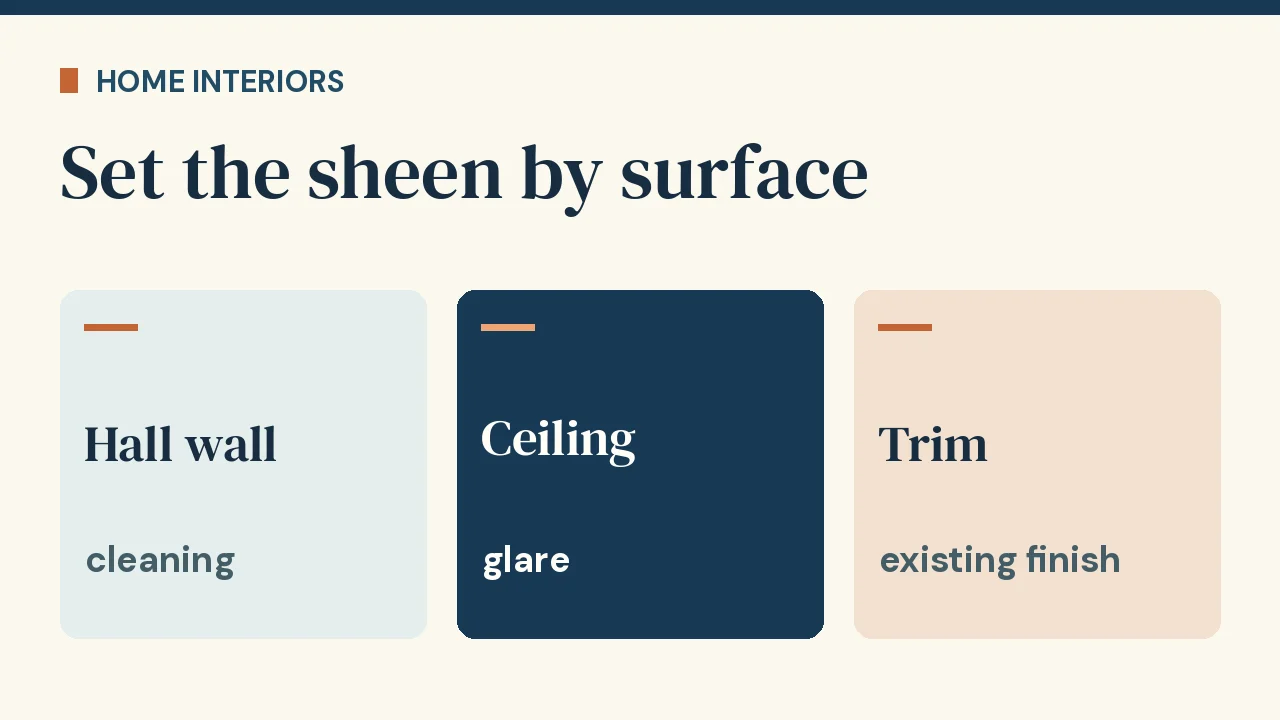
Pick up a hallway wall, ceiling and trim sample in the same white and hold them near a window. Turn them slowly. The difference that becomes obvious as they catch the light is the one you’ll live with every day. Sheen describes how a finish reflects light. The right conversation also covers how a surface is used, what’s already on it and how the selected product can be cleaned.
The hallway wall and the ceiling have different jobs
On a busy hall wall, think about what leaves marks. Coat sleeves brush the corner, hands touch the wall by the switch, and a school bag slides along the same stretch. Tell the painter how often you clean there. Ask for a wall coating whose published care guidance suits that use. If the hall is lit from one end, compare a dried sample on the actual wall. A noticeable reflection can pull your eye to old patches and texture.
A ceiling usually has less hand contact. On a long uninterrupted plane, a low-reflecting finish may suit someone who wants the ceiling to recede. A steep ceiling above an open stair or a low kitchen bulkhead may be seen very differently. Stand back where you can see the entire plane before choosing.
Compare the trim with the wall beside it
On the door casing, the little profile changes direction several times. A more reflective finish can pick up that detail. If your existing trim is staying in the next room, hold the new sample beside it with the connecting door open. You might prefer matching the visible trim to introducing another finish at that opening. Ask what preparation and compatible coating the existing finish needs.
Words such as “eggshell,” “satin” and “pearl” describe ranges that can differ across product lines. Get the manufacturer, line and sheen in writing for each surface. If washability is a deciding factor, ask about that specific coating. Benjamin Moore’s finish guide gives a useful starting comparison. The room finish record lets you keep the actual selection once you’ve compared samples.