
Guide 6 of 10
Will a touch-up show on this wall?
A match on the can is only a start. What you see from the doorway depends on the existing sheen, texture, repairs and the light that travels across the wall.
Stand where you usually see the mark. Can you spot it head-on? Does it show up only when light from the patio door runs along the wall? A little patch in the middle of an uninterrupted wall can draw the eye even when the paint colour is close. What matters is how the repair looks from that ordinary viewing position once it’s dry.
Figure out what you’re trying to match
There are several clues worth taking to the walkthrough. Make a wide photo of the wall, then a close view of the mark. Note whether it’s a surface scuff, a filled hole or a larger patch that changed the texture. Find the old can or a photo of its label. The manufacturer, product line and sheen matter alongside the colour code. The paint and finish record keeps those details together.
A new sample can match the colour well yet reflect a stripe of window light differently. A smooth patch on an older roller-textured wall creates another difference. Even knowing the original product doesn’t tell us how the wall has worn in the meantime. We’d rather know ahead of time that this is the wall you face from the kitchen table.
Choose the test and the fallback together
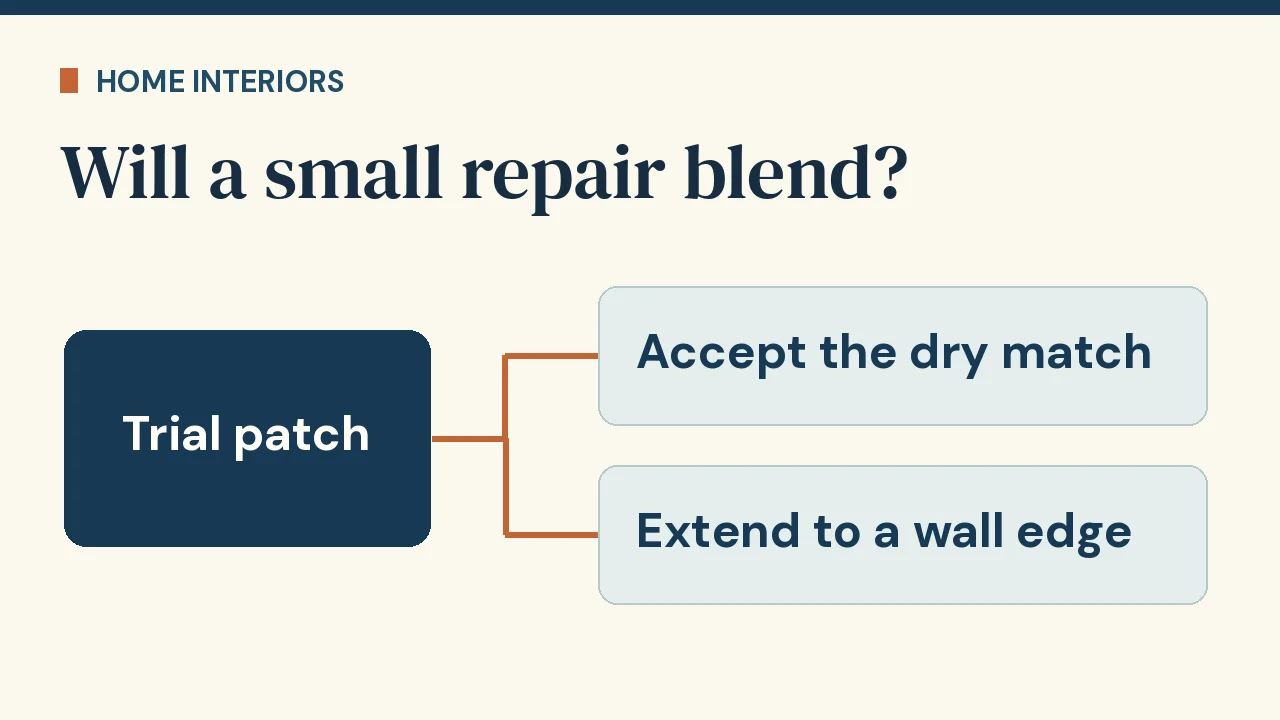
For one small repair, ask whether a discreet sample using the proposed finish would answer the question. Agree where it will go and look at it once it’s dry, under the lighting you actually use. The product’s instructions govern timing. A wet patch tells you very little. Benjamin Moore’s touch-up guidance also explains why matching the existing coating and application matters.
If the sample draws a visible halo, the next sensible boundary might be one wall from inside corner to inside corner. That’s different from repainting the entire room. Ask the painter to mark those boundaries and price the extra work before proceeding. With repeated patches down a long, brightly lit wall, it can make more sense to discuss that wall as the starting scope. You can then decide what level of improvement is worth paying for.