
Guide 8 of 10
How to approve extra painting found after a suite empties
Put the changed condition, proposed work and effect on handback in one message. The person authorizing the spend should be able to answer without guessing.
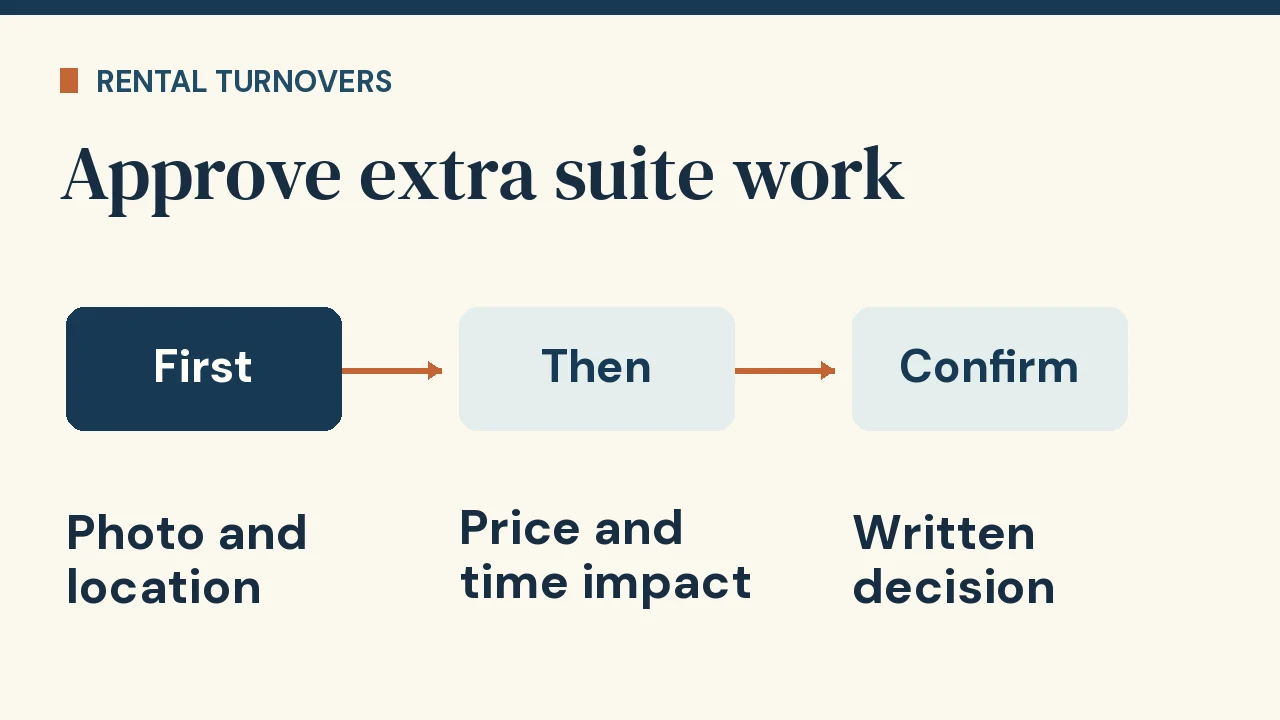
When a wardrobe comes out and reveals damage, start with the accepted quote. It may already cover routine minor patching, or it may identify that wall as an exclusion. Check the wording before calling the discovery an extra. Then document just the part that changed.
Give the manager both views
Take a wide shot that locates the wall and a close-up of the condition. Use a room and surface description the office can match to the work order. “Bedroom two, wall behind the wardrobe, between the closet door and outside corner” is specific enough to check later. Keep identifying belongings and paperwork out of the image.
Ask the painter what the new work would involve. A larger patch may mean extra preparation, repainting to a corner and a return after the repair is ready. If there’s an underlying problem that needs another trade’s assessment, record that separately. Don’t build an approval request on a guessed cause.
Send one request the approver can answer
Copyable message. “While walking [room and surface], we found [condition]. The signed scope covers [original item]. We propose [added preparation, finish and stopping point]. Photos show the location and detail. Added price [written amount or revised quote reference]. Effect on access or handback [confirmed impact or item still to confirm]. Please reply by [time] with approval of that change or your instructions to leave it pending. [Name] can answer on site.”
If the amount or timing is still open, the manager can acknowledge the condition and ask for the revised quote. Keep that separate from approval to proceed. A caretaker who can confirm what the wall looks like may need to pass the decision to a portfolio manager or owner.
Keep the rest of the suite moving where possible
Ask which already-approved rooms can continue while the change is under review. Record the response beside the original item, including who approved it and when. If the change is declined or deferred, mark it for the final paint walkthrough so the receiving person understands why that wall looks different.
The two-bedroom turnover example shows the value of locating a concern as precisely as the inside edge of a door. It also gives you a useful distinction: an item missed within the agreed scope can be a completion item. A newly requested surface needs its own decision.