
Guide 3 of 10
Can this rental wall be touched up, or should we paint it corner to corner?
A known can of paint is a good starting point. The size of the repair, where the light falls and the condition of the surrounding finish decide what to price.
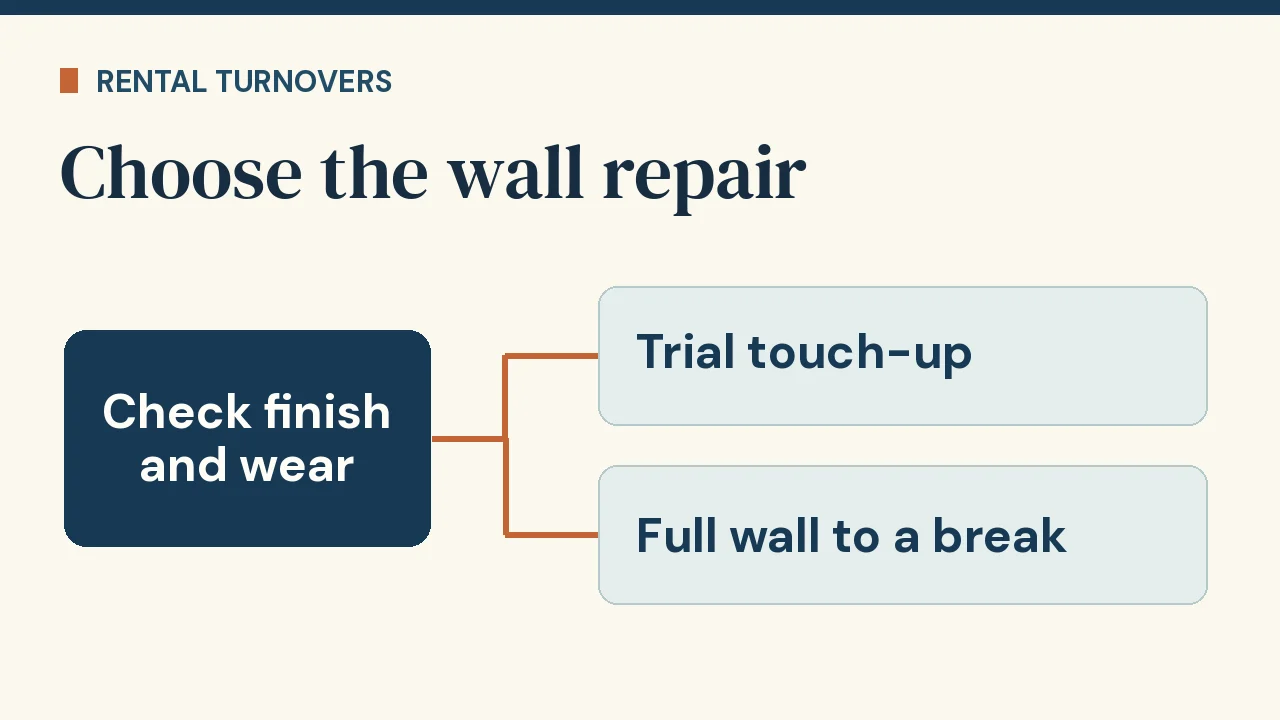
Walk back to the doorway before deciding how much of a marked wall needs paint. A handful of pin marks behind a bedroom door and a patch at eye level beside a patio slider can call for different scopes, even when the original colour is known. Start by deciding how the wall should look from the place people normally see it.
Find out what finish is actually there
Look for a room record or a legible paint-can label. Product line, colour formula and sheen all help. Two cans with the same colour name can leave a different reflection. An older finish can also have wear or cleaning marks that fresh paint won’t reproduce. Tell us if that wall has been repainted since the building standard was chosen.
Check the limits of the damage. A rub that comes off under the finish manufacturer’s care instructions may need no paint. A dent, torn surface or old patch that stands proud is a separate preparation decision. Photograph it from the doorway and then up close. Give the painter those two views before asking for a spot repair.
Pick a natural stopping point
Example. Picture a small scuff near a wardrobe and a long row of filled holes above a sofa. In the first room, a manager with the original finish might ask the painter to assess one discreet touch-up, let it dry as directed, then look from the doorway. In the living room, the patches run across a wall washed by window light. Ask for the cost of painting that face from corner to corner.
A full wall is still a defined scope. Mark where it ends at the ceiling, baseboard and returns. An open-plan surface can carry around a corner farther than you expect. Sketch the stopping point on a wide photo so the quote, work order and handback all describe the same face.
Decide what happens if a spot still shows
Before work starts, ask who can authorize a full wall if the trial is too visible. Keep that decision with the person responsible for the budget and deadline. If the approval doesn’t arrive, the painter can record the result and leave the larger area pending.
Save the confirmed product and location in the paint and finish record. When the surface or original paint is uncertain, the move-out painting checklist covers the details worth taking to a walkthrough.