
Guide 2 of 10
What to put on a weekly vacancy list for your painter
Use one line per suite to separate confirmed access from a forecast, show the painting priority and identify who can approve a change.
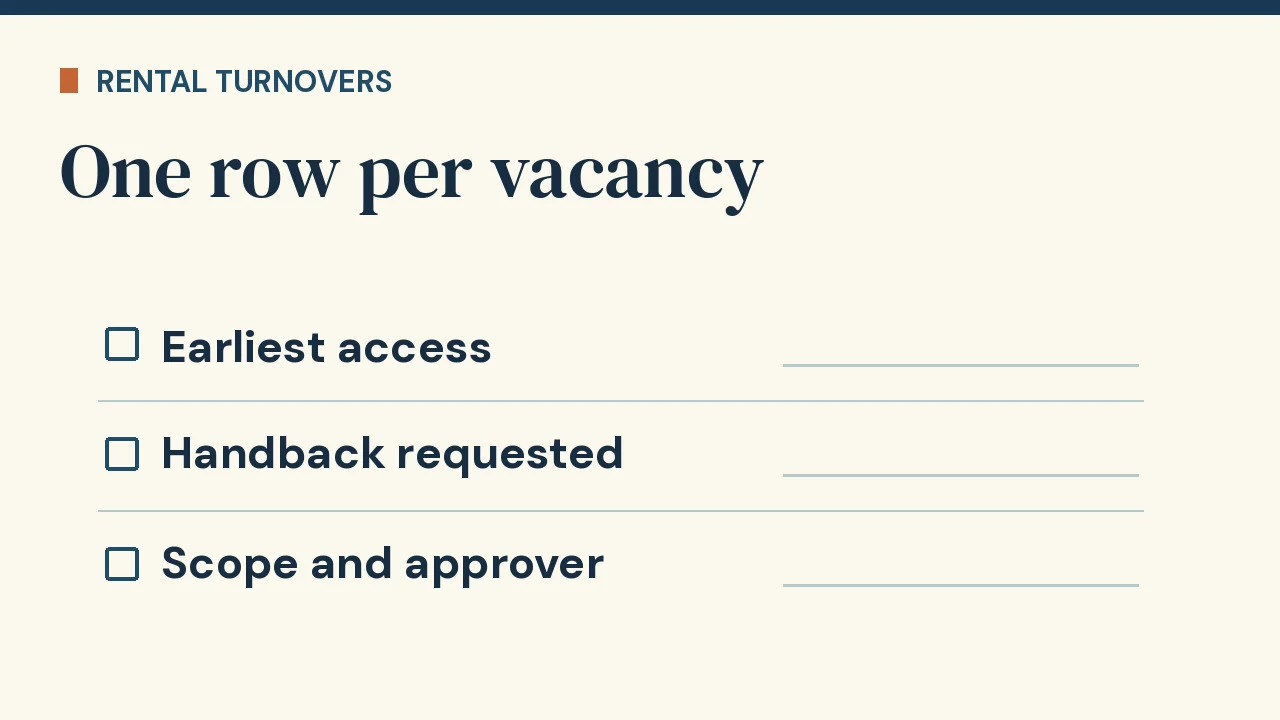
One line per suite is enough to start. Put the opening you most need back at the top. Give every entry a status so a vacancy you expect next month doesn’t get mistaken for an empty unit ready this morning. That distinction matters more to a crew schedule than how many suites are on the list.
Five fields you can reuse every week
Building and suite reference. Use the identifier your coordinator and caretaker already share. Keep tenant names and entry codes out of the sheet.
Access and status. Write “forecast,” “vacant, keys unconfirmed” or “keys confirmed,” followed by the earliest usable time. Include any elevator or building-entry restriction that affects the first visit.
Requested handback and reserved windows. Give the time the suite needs to be available to the next person. The cleaner’s Thursday start may be the real painting deadline even if the new tenant comes Saturday.
Priority surfaces. Name the rooms and faces. “Living room, two full walls and corridor side of entry door” tells us more than “two-bedroom refresh.” Identify the building finish schedule or mark the colour as unknown.
Decision contact. Say who can confirm access, select a finish, and approve a different scope when a suite looks worse after furniture comes out. One person may handle all three.
An example you can copy
Illustrative entry — Building A, Suite B | keys confirmed Tuesday after 1 p.m. | requested Friday noon, flooring installer has the entry Thursday morning | living-room walls and entry trim, wall finish known, trim sheen to verify | building manager confirms access, portfolio manager approves extras.
For a second suite, “Building A, Suite C | forecast, keys to confirm | handback unknown | likely bedroom walls | manager will update after move-out” is useful too. Keep it below the confirmed work. A missing handback is more honest and easier to act on than a date somebody guessed.
Send the changes with the list
Date each edition and flag the rows that moved since the last one. “B is ready, C slipped, D has been added” saves the office from comparing two attachments by eye. When a single row changes between editions, update that row and tell the people whose time it affects.
You can start a recurring-turnover inquiry before you have a specific vacancy. The list gives us a way to scope openings together. Brock or Justin still confirms the agreed work, price and schedule for the suite involved.
Build your vacancy list
Add a suite reference and the details you know. Leave dates open when they’re still moving. Copy the list into your own message or print it before closing this page.