
Guide 6 of 10
What should council approve on a sample hallway?
A useful sample settles colour, sheen, preparation and where the finish stops. Keep one marked reference that the manager, council and painting crew can all find.
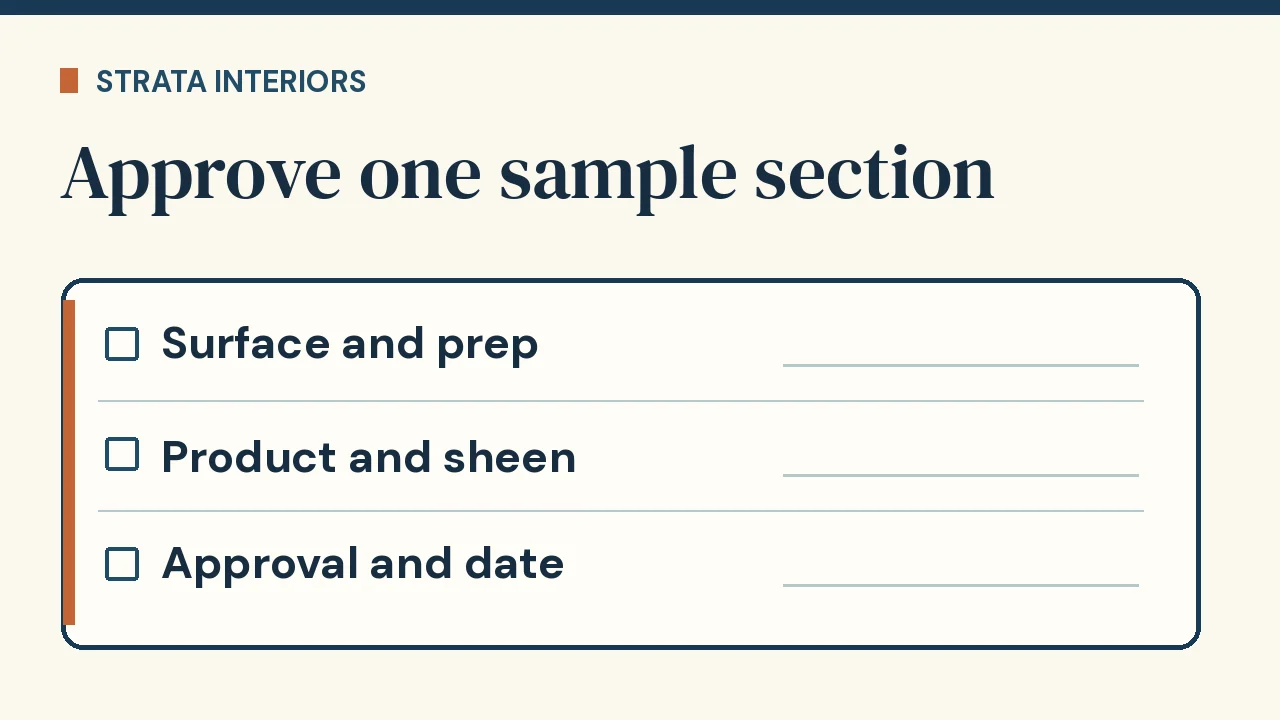
Choose a piece of corridor that tells the truth about the rest of the floor. A patch hidden behind a noticeboard will tell you little about sheen under a row of ceiling lights. A private suite with a large window is a poor stand-in for a hallway lit by fixtures all day. Stand where a resident will actually see the work.
Give the sample a specific job
A colour sample can settle whether the wall reads too warm against the carpet. A prepared sample section can also show the intended repair standard, sheen and line where paint meets trim. Write down which of those questions council is answering. Ask the painter what size and location will make the comparison meaningful, and when the selected finish will be ready to assess under its product directions.
Look at the whole junction
Walk past the sample from both directions. Look at it beside the baseboard, suite door, permanent flooring and overhead lights. If the wall has old texture or repaired sign holes, include a representative spot in the sample where practical. A smooth new piece of board and a patched older wall may show the same finish differently. A photograph is useful for recording location. Have decision-makers view the physical sample before approving the colour and sheen.
Leave the crew one clear reference
A sample record might read, “Level two, east side of elevator, from the corner to the first door frame. Wall colour and sheen approved on this surface. Existing door colour stays. Previous sign patch accepted as shown. Manager to confirm the frame separately.” Add the agreed product information, date and the person authorized by the strata. A change requested after that point needs a new record and review of any work it affects.
The paint and finish record gives the manager a simple place to keep the final selection. Save the approved scope and location with it. Someone standing in the same spot next year should be able to tell which finish was approved and which adjacent pieces remained outside the decision.