
Guide 10 of 10
A final corridor walkthrough that closes every open item
Walk one floor in a consistent direction and give each exception a location, owner and next action. That turns a vague list of touch-ups into a usable handback.
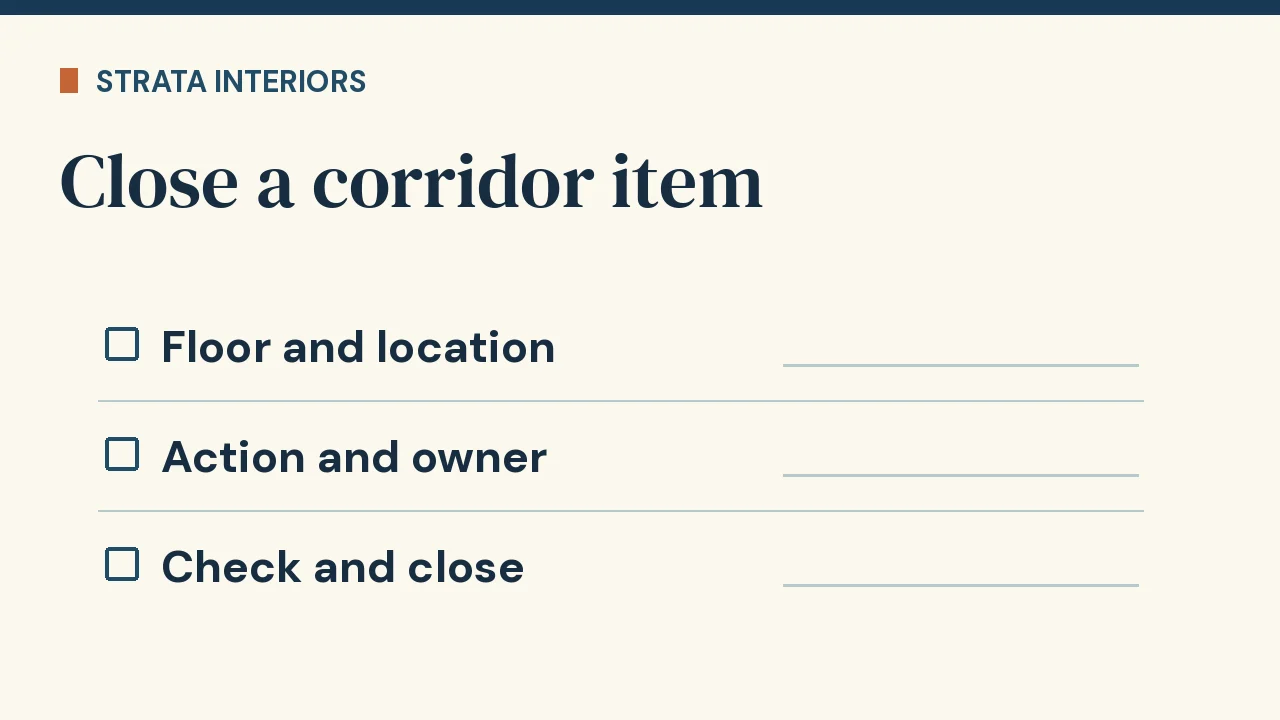
Start with the accepted scope, the approved sample and one person from the building who can identify the areas being handed back. Begin at a fixed point such as the east stair door and follow the same direction on each floor. It is much easier to find “wall between lounge and elevator, floor three” than “a mark in the hallway.”
Follow what was actually approved
Check walls, trim, frames and other included surfaces against the written list. Look at agreed repairs under the normal conditions for that corridor. Verify that noticeboards or other items assigned for reinstatement have been returned, and that the route has been handed back as agreed. Keep a copy of any areas deferred because a resident appointment or separate building repair was outstanding.
Describe the next action
An illustrative entry might read, “Level three, east lounge frame, corridor side. Small missed edge at hinge return. Painter to review Thursday during the planned door visit. Manager to confirm completion after access.” A second could read, “Level two, north wall near end suite. New cart damage reported after handback. Manager to ask for a separate repair price.” The location is equally clear in both entries. The responsibility and next action are different.
Use a wide photograph with a discreet location mark where several doors look alike. Keep private entry details and resident names out of a shared photo file. An item cannot be checked from a close-up of an anonymous white wall.
Decide who can close the record
Before everyone leaves, read back the unresolved items, identify who can confirm each one, and give the manager the next agreed contact date. After the visit, mark the completed items on the same list. Avoid circulating three competing versions with different colour codes. Transfer final products, colours and sheens into the building’s paint and finish record. It gives the next maintenance visit a factual starting point even if the people on council have changed.