
Guide 3 of 10
One door, two faces and a frame: which pieces is council painting?
Say exactly what belongs to the common-hall repaint before anyone multiplies the door count. A labelled example opening can settle the whole schedule.
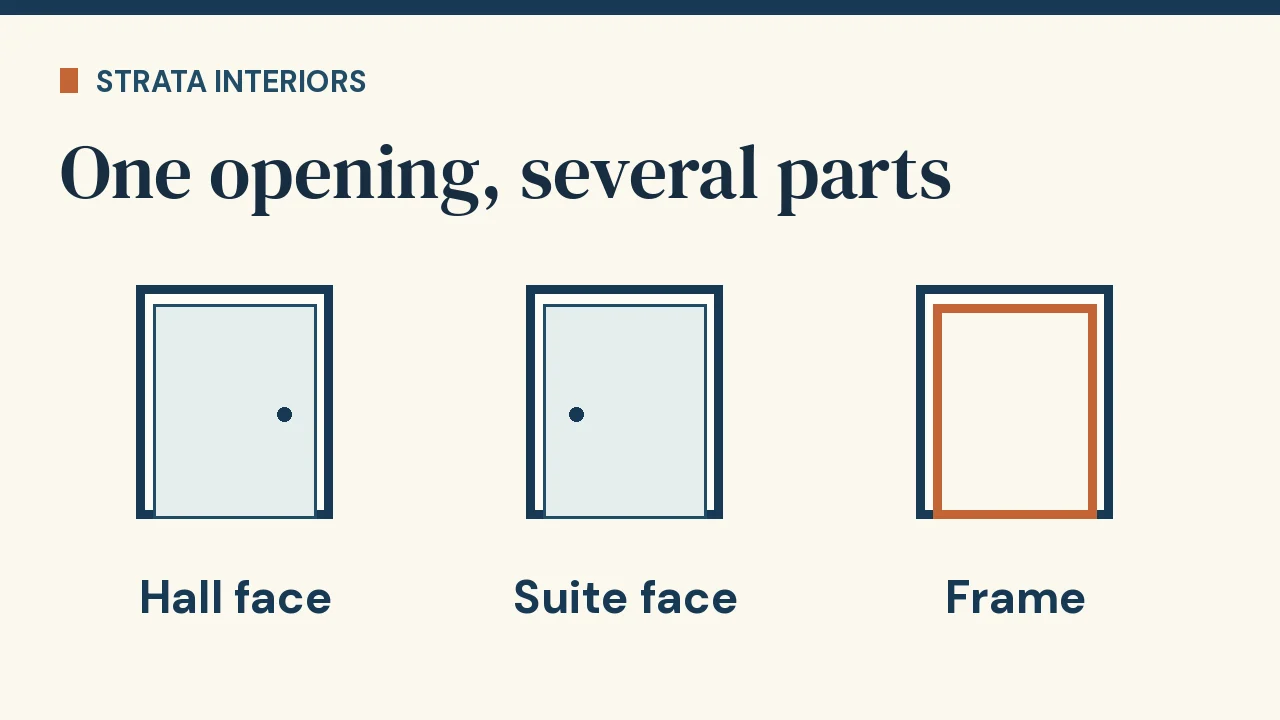
Stand in a corridor with a closed suite door. You can see the corridor face and much of the frame. You can’t see the suite face, the hinge edge or all the surfaces hidden when the door is shut. A quote that says “paint 30 doors” leaves each of those pieces open to interpretation. Give bidders a model opening to copy instead.
Label the pieces in ordinary language
Take a straight-on photograph of a representative opening. Put one arrow on the corridor face, one on the frame and another on any surrounding trim that is a different material or colour. If an edge needs to be included, describe which edge. Mark whether numbers, viewers and other hardware are to be protected or handled under a separate, agreed arrangement. The manager should confirm which pieces the strata can authorize and who can arrange entry.
Count leaves and frames separately
Here is an illustrative door group. A floor has five single suite openings and a pair of doors into a lounge. Council wants the five corridor faces, the corridor faces of the lounge pair and the six frame openings. That is seven faces and six frames. The lounge pair adds two paintable leaves in one opening. Both inner faces of that pair, any edges and the surrounding trim still need a yes, a no or a separate price.
The hallway counter can carry the quantities. Attach the labelled photo so each number also has a physical meaning. Keep the suite entry group separate from common-room or stair doors with a different finish or access arrangement.
Give access its own line
A closed-door scope and a scope that needs openings held available to the crew are two different commitments for the manager. Before council accepts the bid, identify which openings need an appointment and which parts can be completed during an ordinary corridor shift. Write down what happens to one unavailable opening. That small note gives the person booking access a workable instruction.