
Start here
Which common area should council repaint first this winter?
Compare the lobby, a typical hallway and a stairwell on the same walk. A clear first phase gives council a useful decision even when the full building exceeds this year’s budget.
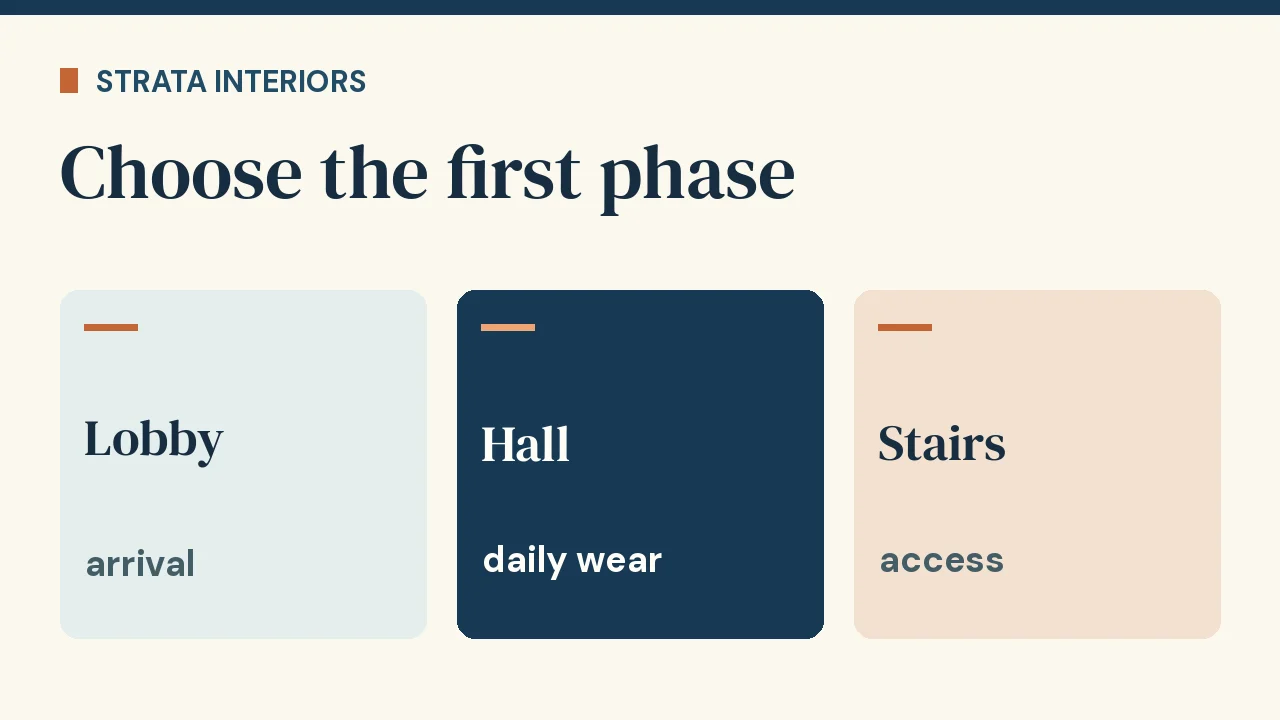
Give council a clear choice on common areas, resident access and the written scope.
Start here
Compare the lobby, a typical hallway and a stairwell on the same walk. A clear first phase gives council a useful decision even when the full building exceeds this year’s budget.
Work through a typical corridor, then record the lobby and end floors separately. A five-minute sketch can keep an entire floor’s worth of assumptions out of the estimate.
Say exactly what belongs to the common-hall repaint before anyone multiplies the door count. A labelled example opening can settle the whole schedule.
Walk the building at the time people actually use it. Then agree which work zone can be released, who announces the change and where a resident goes with an access question.
One closed door should leave a clear record and an agreed next step. Set the missed-access arrangement before notices go out so the crew and manager know what to do.
A useful sample settles colour, sheen, preparation and where the finish stops. Keep one marked reference that the manager, council and painting crew can all find.
Walk the corridor from the floor up and record who protects, removes and reinstalls each item. Agree on the handback before anything comes off the wall.
Use an ordinary stretch of wall and one damaged exception to agree what the base quote covers. Record how further patches will be assessed before repeating the scope across every floor.
Separate the base repaint from choices council can approve independently. A short decision line tells the manager exactly what to instruct after the vote.
Walk one floor in a consistent direction and give each exception a location, owner and next action. That turns a vague list of touch-ups into a usable handback.